

• You are here:
  • Home »
  • Classroom Instruction

Category Archives for Classroom Instruction

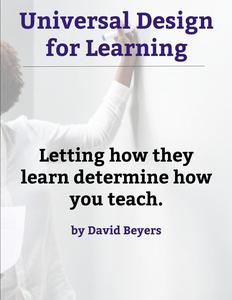
Universal Design for Learning

- 3 Credits - 

Instructor:

David A. Beyers Ed.M.

Accredited By:

- Colorado State University Pueblo

Grade Type:

University Transcript: Pass/Fail Grade

Course Description

This workshop is intended as an introduction to Universal Design for Learning (UDL).  Students will explore the advantages of designing curriculum with UDL, as well as a variety of technology tools that support its implementation.

View Full Course Description

$425

3 Semester Graduate Credits

Item categoryclassroom-instructionpage2 not found.Item ma-categoryclassroom-instructionpage2 not found.Item categoryclassroom-instructionpage22 not found.Item ma-categoryclassroom-instructionpage22 not found.

Universal Design for Learning

- 3 Graduate Credits -

Course Objectives


From this course, participants will:

  1. Discuss the origin of UDL and its adaptation to a set of principles for education.
  2. Explore the potential of UDL to positively impact the modern classroom.
  3. Identify technologies to address each of the three principles of UDL.
  4. Adapt an existing lesson plan to meet the principles of UDL and technology integration.
  5. Reflect on the UDL model and its application.

Credit Hours

3 Semester Credits (post-baccalaureate professional development credit)

Course Instructor

David A. Beyers Ed.M.

Accredited By:

- Colorado State University Pueblo

Grade Type

University Transcript: Pass/Fail Grade

Universal Design for Learning

What Others Are Saying...

I would like to personally thank the individual or group who decided to offer courses that were very ideally fitting for educators. I am more excited about these courses than any professional development I have taken in over ten years. Thank you for thinking outside the box and offering courses that sound so fascinating and meaningful.” – Tina B. , Maryland
Thank you very much, I appreciate your help in getting this to me for timely processing with my district.” – Christine G. , Indiana
Thank you for your willingness to e-mail me promptly regarding my questions. I really, really appreciate the format that TLC provided me. I will definitely continue to share my positive experience with fellow staff and hopefully you will see continued fruit from that. I will definitely use TLC again.” – Darin K. , Oregon
My superintendant forwarded an email about TLC to me” – J. Churchill. Danvers, MA
I heard about this program through a friend. The courses were approved by the Virginia Board of Education” – M. Barry. Fairfax, VA
Thanks for the feedback on Part B of the coursework. I used it as part of a World Geography course, and it was a success, so I will make it a regular part of curriculum!…” – Carolyn P. Boulder, CO – Understanding Hispanic Students and Issues


Continue Reading >>

How Boys & Girls Learn Differently

- 3 Credits - 

3 Semester Credits

(post-baccalaureate
PD credits for re-certification and
pay-lane increases
)

  • accredited nationwide
  • start any time
  • up to 5 months to complete
  • independent study
  • all course materials included with course tuition
  • view FAQ

Course Description

This course will examine the learning differences between girls and boys. Their inherent learning and social dynamics are explored. The development differences, structure and spectrum of gender brain operations are explained. Practical considerations for creating the ultimate classroom environments for elementary and secondary schools are profiled. This course will focus on classroom applications for an understanding of how brain-based gender learning affects teaching. The course covers behavior, math instruction, testing and academic achievement to teaching applications in school environments.

Teacher feedback about this course

$425

3 Semester Graduate Credits

Item categoryclassroom-instructionpage2 not found.Item ma-categoryclassroom-instructionpage2 not found.Item categoryclassroom-instructionpage22 not found.Item ma-categoryclassroom-instructionpage22 not found.

Boys and Girls Learn Differently

- 3 Graduate Credits -

Course Objectives

  1. Students will have a working knowledge of the inherent differences in learning approaches between boys and girls and how their minds are different.
  2. Participants will analyze the social and psychological dynamics involving gender differences such as brain functional and chemical differences, as well as the advantages and disadvantages of taking a gender approach.
  3. Educators will learn how to identify high-performing at-risk students and what parents can do to intervene when their child begins to fail in school.
  4. Educators will examine the ideal classroom environments for pre-school, elementary, middle and high school classrooms. Strategies that stimulate and nurture student learning are also provided.
  5. Teachers will write chapter reviews, research the topic and develop an application paper or lesson project activities that utilize the course content as it applies to classroom instruction and learning environments.

Credit Hours

3 Semester Credits (post-baccalaureate professional development credit)

Course Instructor

Joseph C’de Baca MaEd.

Grade Type

University Transcript: Click Here For Details

Boys and Girls Learn Differently

How Boys & Girls Learn Differently

- 3 Credits -  3 Semester Credits (post-baccalaureate PD credits for re-certification andpay-lane increases) accredited nationwide start any time up to 5 months to complete independent study all course materials included with course tuition view FAQ Course Description This course will examine the learning differences between girls and boys. Their inherent learning and social dynamics are explored. The development differences, structure and spectrum of gender brain operations are explained. Practical considerations for creating the ultimate classroom environments for elementary and secondary schools are profiled. This course will focus on classroom applications for an understanding of how brain-based gender learning affects teaching.

TLC Testimonials

I would like to personally thank the individual or group who decided to offer courses that were very ideally fitting for educators. I am more excited about these courses than any professional development I have taken in over ten years. Thank you for thinking outside the box and offering courses that sound so fascinating and meaningful.” – Tina B. , Maryland
Thank you very much, I appreciate your help in getting this to me for timely processing with my district.” – Christine G. , Indiana
Thank you for your willingness to e-mail me promptly regarding my questions. I really, really appreciate the format that TLC provided me. I will definitely continue to share my positive experience with fellow staff and hopefully you will see continued fruit from that. I will definitely use TLC again.” – Darin K. , Oregon
My superintendant forwarded an email about TLC to me” – J. Churchill. Danvers, MA
I heard about this program through a friend. The courses were approved by the Virginia Board of Education” – M. Barry. Fairfax, VA
Thanks for the feedback on Part B of the coursework. I used it as part of a World Geography course, and it was a success, so I will make it a regular part of curriculum!…” – Carolyn P. Boulder, CO – Understanding Hispanic Students and Issues

$425

(3 Semester Graduate Credits)


Continue Reading >>

Helping Students Who Struggle with Math

- 3 Credits - 

3 Semester Credits

(post-baccalaureate
PD credits for re-certification and
pay-lane increases
)

  • accredited nationwide
  • start any time
  • up to 5 months to complete
  • independent study
  • all course materials included with course tuition
  • view FAQ

Course Description

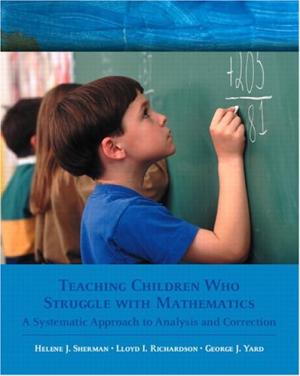
This course will help math teachers use this problem-solving guide to quickly know exactly what to do for students who struggle with math. Basic math concepts and skills, such as place values, whole number computation, decimals and problem-solving are re-presented to help teachers reach students. Educators will evaluate their instructional approaches and adapt a systematic approach to analysis and correction strategies for instruction that enhances learning mathematics. Participants will write and develop lessons or activities for classroom applications that help students remediate and understand and compute mathematics.

Teacher feedback about this course

$425

3 Semester Graduate Credits

Item categoryclassroom-instructionpage2 not found.Item ma-categoryclassroom-instructionpage2 not found.Item categoryclassroom-instructionpage22 not found.Item ma-categoryclassroom-instructionpage22 not found.

Teaching Learners Who Struggle with Mathematics

- 3 Graduate Credits -

Course Objectives

  1. Educators will learn about the dissimilar learner and techniques to help students who struggle with mathematics use strategies for using place value in a variety of techniques.
  2. Teachers will reexamine the addition of whole numbers to present the process using a variety of techniques. Then use the techniques in the subtraction of whole numbers.
  3. Educators will learn about applying a variety of techniques for multiplication and division to reach the diverse perspectives and learning styles of students.
  4. A variety of instructional approaches for understanding rational numbers with decimals and presenting them to students who have a hard time working with numbers.
  5. Teachers will develop lesson or unit plans that apply literacy strategies for addressing learning deficiencies and how this can help students improve their mathematical skills.

Credit Hours

3 Semester Credits (post-baccalaureate professional development credit)

Course Instructor

Whitney Hartwell Ma.Ed.

Grade Type

University Transcript: Click Here For Details

Teaching Learners Who Struggle with Mathematics

What Others Are Saying About This Course

Scott R. – IL –

“Thanks. I gather you did receive my work? I’ll attach it again here anyway, just in case. Thanks, I need to get it graded and the transcript ASAP. I’ve enjoyed these courses, especially the first 2. I’ll be looking for more soon. Let me know if it all didn’t send correctly, I believe it did.“

TLC Testimonials

I would like to personally thank the individual or group who decided to offer courses that were very ideally fitting for educators. I am more excited about these courses than any professional development I have taken in over ten years. Thank you for thinking outside the box and offering courses that sound so fascinating and meaningful.” – Tina B. , Maryland
Thank you very much, I appreciate your help in getting this to me for timely processing with my district.” – Christine G. , Indiana
Thank you for your willingness to e-mail me promptly regarding my questions. I really, really appreciate the format that TLC provided me. I will definitely continue to share my positive experience with fellow staff and hopefully you will see continued fruit from that. I will definitely use TLC again.” – Darin K. , Oregon
My superintendant forwarded an email about TLC to me” – J. Churchill. Danvers, MA
I heard about this program through a friend. The courses were approved by the Virginia Board of Education” – M. Barry. Fairfax, VA
Thanks for the feedback on Part B of the coursework. I used it as part of a World Geography course, and it was a success, so I will make it a regular part of curriculum!…” – Carolyn P. Boulder, CO – Understanding Hispanic Students and Issues

$425

(3 Semester Graduate Credits)


Continue Reading >>

Why Gender Matters

- 3 Credits - 


3 Semester Credits

(post-baccalaureate
PD credits for re-certification and
pay-lane increases
)

  • accredited nationwide
  • start any time
  • up to 5 months to complete
  • independent study
  • all course materials included with course tuition
  • view FAQ

Course Description

This course will re-examine the basic gender differences and social behavior patterns that parents and teachers should know. Biological and psychological gender differences are examined regarding society. Teachers will examine the latest research as it applies to students and teachers in the classroom as well as school settings. Educators will learn about improving some gender accommodations for academic achievement of all students. Educators will research the basic gender differences as well as the alternative gender preferences and lifestyles that exist. Teachers will develop lessons or activities for classroom applications that help all students understand basic gender differences and alternative preferences so students can be successful in school and society.

Teacher feedback about this course

$425

3 Semester Graduate Credits


Item categoryclassroom-instructionpage2 not found.Item ma-categoryclassroom-instructionpage2 not found.Item categoryclassroom-instructionpage22 not found.Item ma-categoryclassroom-instructionpage22 not found.

Why Gender Matters

- 3 Graduate Credits -


Course Objectives

  1. Educators will understand the basic psychological behavior variations that exist along with the physiological differences that affect the bodies operational systems.
  2. Students will recognize the hidden roles and social class expectations regarding both sexes and approaches to addressing problems, risks and social group practices.
  3. Educators will analyze the gender behavioral variations in schools and social media influences and how sexuality may be affected in both school and public environments.
  4. Participants will study about how drugs and alcohol may be perceived differently between the genders and the potential consequences of abuses to young people.
  5. Educators will research the issues related to gender differences as well as the various alternative sexual preferences and identities that are currently affecting social norms.
  6. Teachers will develop a lesson/unit plan and or activity/project that involve gender differences and improve their understanding for better student instruction and learning.

Credit Hours

3 Semester Credits
(post-baccalaureate professional development credit)

Course Instructor

Joseph C’de Baca MaEd.

Grade Type

University Transcript: Click Here For Details

Why Gender Matters

Why Gender Matters

- 3 Credits -  3 Semester Credits (post-baccalaureate PD credits for re-certification andpay-lane increases) accredited nationwide start any time up to 5 months to complete independent study all course materials included with course tuition view FAQ Course Description This course will re-examine the basic gender differences and social behavior patterns that parents and teachers should know. Biological and psychological gender differences are examined regarding society. Teachers will examine the latest research as it applies to students and teachers in the classroom as well as school settings. Educators will learn about improving some gender accommodations for academic achievement of all students. Educators

TLC Testimonials

I would like to personally thank the individual or group who decided to offer courses that were very ideally fitting for educators. I am more excited about these courses than any professional development I have taken in over ten years. Thank you for thinking outside the box and offering courses that sound so fascinating and meaningful.”
– Tina B. , Maryland
Thank you very much, I appreciate your help in getting this to me for timely processing with my district.”
– Christine G. , Indiana
Thank you for your willingness to e-mail me promptly regarding my questions. I really, really appreciate the format that TLC provided me. I will definitely continue to share my positive experience with fellow staff and hopefully you will see continued fruit from that. I will definitely use TLC again.” – Darin K. , Oregon
My superintendant forwarded an email about TLC to me”
– J. Churchill. Danvers, MA
I heard about this program through a friend. The courses were approved by the Virginia Board of Education”
– M. Barry. Fairfax, VA
Thanks for the feedback on Part B of the coursework. I used it as part of a World Geography course, and it was a success, so I will make it a regular part of curriculum!…”
– Carolyn P. Boulder, CO – Understanding Hispanic Students and Issues


$425

(3 Semester Graduate Credits)


Continue Reading >>

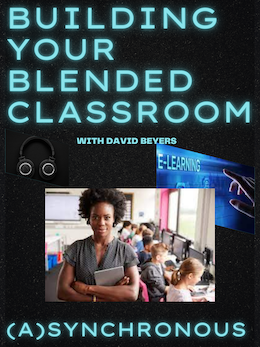
Building Your Blended Classroom: Leveraging Resources to Reach Learners

- 3 Credits - 

Instructor:

David A. Beyers Ed.M.

Accredited By:

- Colorado State University Pueblo

Course Description

This course is intended for teachers who are interested in or have already begun
incorporating online instruction into their classrooms.

View Full Course Description

$425

3 Semester Graduate Credits



Item categoryclassroom-instructionpage2 not found.Item ma-categoryclassroom-instructionpage2 not found.Item categoryclassroom-instructionpage22 not found.Item ma-categoryclassroom-instructionpage22 not found.

Building Your Blended Classroom: Leveraging Resources to Reach Learners

- 3 Graduate Credits -


Course Objectives

From this course, participants will:

  1. Evaluate the potential for online and technology-enriched instruction to engage and teach today’s learners.
  2. Identify the major components of Behaviorism, Cognitivism, Constructivism, and Connectivism, and apply these theories to online and blended instruction.
  3. Define the roles of an online instructor, and evaluate the importance of these roles.
  4. Explore various Web 2.0 technologies and assess their potential as learning tools in an online or technology-rich classroom.
  5. Create a unit outline for blended classroom application.

Credit Hours

3 Semester Credits
(post-baccalaureate professional development credit)

Course Instructor

David A. Beyers Ed.M.

Accredited By:

- Colorado State University Pueblo

Grade Type

University Transcript: Letter Grade

Building Your Blended Classroom: Leveraging Resources to Reach Learners

What Others Are Saying...

I would like to personally thank the individual or group who decided to offer courses that were very ideally fitting for educators. I am more excited about these courses than any professional development I have taken in over ten years. Thank you for thinking outside the box and offering courses that sound so fascinating and meaningful.”
– Tina B. , Maryland
Thank you very much, I appreciate your help in getting this to me for timely processing with my district.”
– Christine G. , Indiana
Thank you for your willingness to e-mail me promptly regarding my questions. I really, really appreciate the format that TLC provided me. I will definitely continue to share my positive experience with fellow staff and hopefully you will see continued fruit from that. I will definitely use TLC again.” – Darin K. , Oregon
My superintendant forwarded an email about TLC to me”
– J. Churchill. Danvers, MA
I heard about this program through a friend. The courses were approved by the Virginia Board of Education”
– M. Barry. Fairfax, VA
Thanks for the feedback on Part B of the coursework. I used it as part of a World Geography course, and it was a success, so I will make it a regular part of curriculum!…”
– Carolyn P. Boulder, CO – Understanding Hispanic Students and Issues
Continue Reading >>

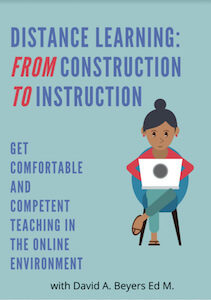
Distance Learning: From Construction to Instruction

- 3 Credits - 

3 Semester Credits

(post-baccalaureate
PD credits for re-certification and
pay-lane increases
)

  • accredited nationwide
  • start any time
  • independent study
  • all course materials included with course tuition
  • view FAQ

Instructor:

David A. Beyers Ed.M.

Accredited By:

- Colorado State University Pueblo

Grade Type:

University Transcript: Pass/Fail Grade

Course Description

The goal of this course is to provide participants with a framework of the skills, strategies, and tools necessary for designing, building, and facilitating a fully online or blended learning experience for students of all levels, identities, backgrounds and beliefs.

View Full Course Description

$425

3 Semester Graduate Credits


Item categoryclassroom-instructionpage2 not found.Item ma-categoryclassroom-instructionpage2 not found.Item categoryclassroom-instructionpage22 not found.Item ma-categoryclassroom-instructionpage22 not found.

Distance Learning: From Construction to Instruction

- 3 Graduate Credits -


Course Objectives

From this course, participants will:

  1. Define the roles of the teacher in creating and facilitating an online or blended classroom environment. 
  2. Explore the impact of the Digital Divide on student learning and classroom instruction.
  3. Employ effective design models, concepts, strategies, and tools in the creation of an online/blended learning classroom.
  4. Outline a plan for the creation and facilitation of an engaging online/blended learning community.

Credit Hours

3 Semester Credits
(post-baccalaureate professional development credit)

Course Instructor

David A. Beyers Ed.M.

Accredited By:

- Colorado State University Pueblo

Grade Type

University Transcript: Pass/Fail Grade

Distance Learning: From Construction to Instruction

What Others Are Saying About This Course

Theresa M. – PA –

“Hello, Dave. In my email to parents, I mentioned my very recent course with you [Designing an Online Classroom]. I had no idea how timely it would be. I do believe that my students and I haven’t skipped a beat! Of course, it changes things a fair amount, but I am very glad to already have experience with tools that were fun in the classroom but indispensable now!”

TLC Testimonials

I would like to personally thank the individual or group who decided to offer courses that were very ideally fitting for educators. I am more excited about these courses than any professional development I have taken in over ten years. Thank you for thinking outside the box and offering courses that sound so fascinating and meaningful.”
– Tina B. , Maryland
Thank you very much, I appreciate your help in getting this to me for timely processing with my district.”
– Christine G. , Indiana
Thank you for your willingness to e-mail me promptly regarding my questions. I really, really appreciate the format that TLC provided me. I will definitely continue to share my positive experience with fellow staff and hopefully you will see continued fruit from that. I will definitely use TLC again.” – Darin K. , Oregon
My superintendant forwarded an email about TLC to me”
– J. Churchill. Danvers, MA
I heard about this program through a friend. The courses were approved by the Virginia Board of Education”
– M. Barry. Fairfax, VA
Thanks for the feedback on Part B of the coursework. I used it as part of a World Geography course, and it was a success, so I will make it a regular part of curriculum!…”
– Carolyn P. Boulder, CO – Understanding Hispanic Students and Issues


Continue Reading >>

A Framework for Understanding Poverty

- 3 Credits - 


3 Semester Credits

(post-baccalaureate
PD credits for re-certification and
pay-lane increases
)

  • accredited nationwide
  • start any time
  • up to 5 months to complete
  • independent study
  • all course materials included with course tuition
  • view FAQ

Course Description

This course will study the patterns and behaviors of people in the culture of poverty. Social class rules and characteristics of generational poverty are explored. Teachers will examine the latest research as it applies to students in the classroom as well as parents. Educators will learn about improving instruction and academic achievement among students. Educators will research this issue for alternative or additional views to addressing the issue of poverty. Teachers may develop lessons or activities for classroom applications that help all students to be successful in school.

Teacher feedback about this course

$425

3 Semester Graduate Credits


Item categoryclassroom-instructionpage2 not found.Item ma-categoryclassroom-instructionpage2 not found.Item categoryclassroom-instructionpage22 not found.Item ma-categoryclassroom-instructionpage22 not found.

A Framework For
Understanding Poverty

- 3 Graduate Credits -


Course Objectives

  1. Educators will acquire a framework of the culture of poverty and the role of language.
  2. Participants will learn about the hidden roles among social classes and how those roles influence how students work, behave and perceive the school experience.
  3. Educators will learn about the characteristics of generational poverty and how the patters of behavior, problems and world views are passed to future generations.
  4. Participants will explore the resources, role models, discipline and support systems.
  5. Educators will research the culture of poverty issue regarding alternative theories and conclusions presented in the book, as well as present a variety of solutions.
  6. Teachers will develop a lesson or unit plan that utilizes strategies or activities in the book and how to use instructional techniques to improve student achievement.

Credit Hours

3 Semester Credits
(post-baccalaureate professional development credit)

Course Instructor

Joseph C’de Baca MaEd.

Grade Type

University Transcript: Click Here For Details

A Framework For Understanding Poverty

What Others Are Saying About This Course

Jane T. – IL –

“I learned a great deal in this class and appreciate it’s affordability.”                                    

Karen S. – IN –

“Thanks! I loved the book!!”                                    

Catherine H. – MI –

“got it, thanks for the quick response. And I really like hearing that it’s all about me! Cathy (the Poverty one, not the Dropout one) :)”

Dolores H. – MI –

” My name is Dolores Harley. I registered for the online course “Understanding Poverty” in September of 2010. I dove in and read the entire book and started applying the ideas and concepts right away. The book was fascinating and I couldn’t put it down. Due to an extremely heavy work load during the school year I was not able to dedicate the time I wanted to complete the course work. I am beginning that work now. It is my hope that you will accept my work between now and sometime in September, 2011. I am enjoying the work

Marshelle G. – ND –

” Thank you so much for getting this done in such a timely manner! I will be able to have it post marked by the 15th and this saved me paying double to have my SW license renewed! I really appreciate your time! I am glad that my assignments were up to your standards for an “A” grade! I learned so much from this book! Thank you again!”

TLC Testimonials

I would like to personally thank the individual or group who decided to offer courses that were very ideally fitting for educators. I am more excited about these courses than any professional development I have taken in over ten years. Thank you for thinking outside the box and offering courses that sound so fascinating and meaningful.”
– Tina B. , Maryland
Thank you very much, I appreciate your help in getting this to me for timely processing with my district.”
– Christine G. , Indiana
Thank you for your willingness to e-mail me promptly regarding my questions. I really, really appreciate the format that TLC provided me. I will definitely continue to share my positive experience with fellow staff and hopefully you will see continued fruit from that. I will definitely use TLC again.” – Darin K. , Oregon
My superintendant forwarded an email about TLC to me”
– J. Churchill. Danvers, MA
I heard about this program through a friend. The courses were approved by the Virginia Board of Education”
– M. Barry. Fairfax, VA
Thanks for the feedback on Part B of the coursework. I used it as part of a World Geography course, and it was a success, so I will make it a regular part of curriculum!…”
– Carolyn P. Boulder, CO – Understanding Hispanic Students and Issues


$425

(3 Semester Graduate Credits)


Continue Reading >>

Character and Temperament Types for Educators

- 2 Credits - 


2 Semester Credits

(post-baccalaureate
PD credits for re-certification and
pay-lane increases
)

  • accredited nationwide
  • start any time
  • up to 5 months to complete
  • independent study
  • all course materials included with course tuition
  • view FAQ

Course Description

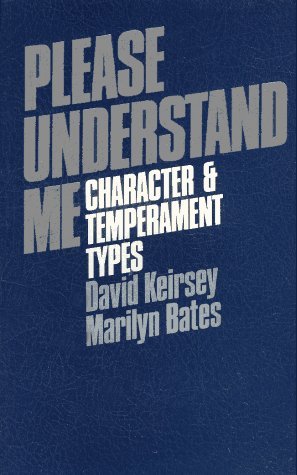
Educators will have a working knowledge of the four temperament types that include: Rational, Guardian, Artisan and Idealist. Personalities of their students and adults in educational and social settings will be explored. Participants will take the personality test to determine what temperament type they are, as well as their own particular teaching and learning style preferences. Educators will be able to apply the character and temperament types to classroom and school settings. They will also examine inter-faculty relationships and school staff to improve communications, productivity and effectiveness.

Teacher feedback about this course

$325

2 Semester Graduate Credits


Item categoryclassroom-instructionpage2 not found.Item ma-categoryclassroom-instructionpage2 not found.Item categoryclassroom-instructionpage22 not found.Item ma-categoryclassroom-instructionpage22 not found.

Character and Temperament Types: Please Understand Me

- 2 Graduate Credits -


Course Objectives

  1. Educators will have a working knowledge of the four temperament types that include: Rational, Guardian, Artisan and Idealist personalities of their students and adults in educational and social settings.
  2. Participants will take the personality test to determine what temperament type they are as well as their own particular teaching and learning styles preferences.
  3. Educators will be able to apply the character and temperament types to classroom and school settings. They will also apply them to inter-faculty relationships and school staff to improve communications, productivity and effectiveness.
  4. Educators will respond to the questions about how personality and character traits apply to classroom instruction, student and teacher effectiveness in school and society

Credit Hours

2 Semester Credits
(post-baccalaureate professional development credit)

Course Instructor

Joseph C’de Baca MaEd.

Grade Type

University Transcript: Click Here For Details

Character and Temperament Types: Please Understand Me

What Others Are Saying About This Course

Tracey W. – WV –

“That was speedy! Thank you again for your time and all that you do!”                                      

Tanja S. – CA –

“I enjoyed reading the book, and it will help me understand my students better.”

Bonnie M. – NV –

“Thank you. A lot of work for one credit but I feel I accomplished a task that was worthwhile. Have a Peaceful and Joyous Holiday Season,“

Julia G. – IA –

“I liked the grade rubric for the assignments because it gave me an idea of what you expected on each assignment. I worked toward and “A” for the class and reading the rubric expectations made it easier. “

Tina B. – MD –

“I would like to personally thank the individual or group who decided to offer courses that were very ideally fitting for educators. I am more excited about these courses than any professional development I have taken in over ten years. Thank you for thinking outside the box and offering courses that sound so fascinating and meaningful.”

TLC Testimonials

I would like to personally thank the individual or group who decided to offer courses that were very ideally fitting for educators. I am more excited about these courses than any professional development I have taken in over ten years. Thank you for thinking outside the box and offering courses that sound so fascinating and meaningful.”
– Tina B. , Maryland
Thank you very much, I appreciate your help in getting this to me for timely processing with my district.”
– Christine G. , Indiana
Thank you for your willingness to e-mail me promptly regarding my questions. I really, really appreciate the format that TLC provided me. I will definitely continue to share my positive experience with fellow staff and hopefully you will see continued fruit from that. I will definitely use TLC again.” – Darin K. , Oregon
My superintendant forwarded an email about TLC to me”
– J. Churchill. Danvers, MA
I heard about this program through a friend. The courses were approved by the Virginia Board of Education”
– M. Barry. Fairfax, VA
Thanks for the feedback on Part B of the coursework. I used it as part of a World Geography course, and it was a success, so I will make it a regular part of curriculum!…”
– Carolyn P. Boulder, CO – Understanding Hispanic Students and Issues


$325

(2 Semester Graduate Credits)


Insert Content Template or Symbol

Continue Reading >>

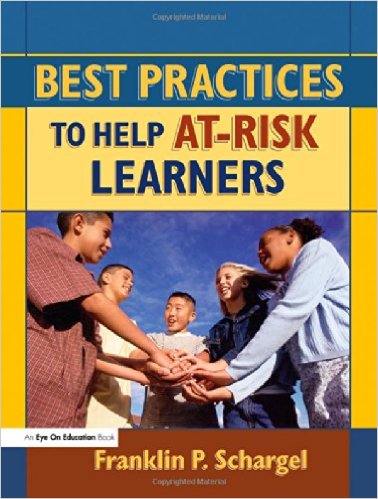
Best Practices for At- Risk Learners

- 3 Credits - 


3 Semester Credits

(post-baccalaureate
PD credits for re-certification and
pay-lane increases
)

  • accredited nationwide
  • start any time
  • up to 5 months to complete
  • independent study
  • all course materials included with course tuition
  • view FAQ

Course Description

This course presents 46 research-based tools, worksheets and resources which have been field-tested at schools and in dropout prevention programs nationwide. They help teachers, administrators, counselors and special educators who work with at-risk learners. It also explores the 15 strategies identified by the National Dropout Prevention Center. The book has indexes by grade level, job title and by individual strategy. Educators will research the topic; develop writings, lessons or activities for classroom applications that help at-risk students to be successful in school.

Teacher feedback about this course

$425

3 Semester Graduate Credits


Item categoryclassroom-instructionpage2 not found.Item ma-categoryclassroom-instructionpage2 not found.Item categoryclassroom-instructionpage22 not found.Item ma-categoryclassroom-instructionpage22 not found.

At-Risk Learners: Best Practices

- 3 Graduate Credits -


Course Objectives

  1. Educators will acquire a framework of working knowledge to teach at-risk students.
  2. Participants taking this course will learn about ways of encouraging students to think about staying in school and how to make schools family friendly.
  3. Educators will learn how to identify high-performing at-risk students and what parents can do to intervene when their child begins to fail in school.
  4. Participants will explore the best practices and strategies that can help reduce school disenfranchisement and potential dropouts.
  5. Educators will research the topic, develop a lesson or activities that utilizes strategies in the book and use the instructional techniques for improving student achievement.

Credit Hours

3 Semester Credits (post-baccalaureate professional development credit)

Course Instructor

Joseph C’de Baca MaEd.

Grade Type

University Transcript: Click Here For Details

At-Risk Learners: Best Practices

What Others Are Saying About This Course

Vicki W. – OH –

“Thank you soooo much! I appreciate all of your help getting started (and finished) with this course! “                                    

Alexis L. – PA –

“Thank you very much for getting back to me so quickly! I just have one more question. Is there any way I can get an electronic copy of my receipt for these two courses? Thank you so much for your time. I’ll be sure to let more of my colleagues know about the wonderful opportunities you present to educators for continuing education!“

David H. – TN –

“I’ve been working on the “Dropout Dilemma” and will probably finish it up tomorrow. Just want to say that I’ve enjoyed becoming acquainted with your viewpoints in “Understanding Hispanic Students” and the “Dropout Dilemma.” … it is refreshing to hear someone in education speak the truth without fear of offending the politically correct. Your observations and recommendations for improving education are spot-on. I can tell you have spent some time in the real-life classroom environment. Thanks for everything”

David H. – TN –

“Once again, I really enjoyed the course and got a lot out of it. Thanks.”

TLC Testimonials

I would like to personally thank the individual or group who decided to offer courses that were very ideally fitting for educators. I am more excited about these courses than any professional development I have taken in over ten years. Thank you for thinking outside the box and offering courses that sound so fascinating and meaningful.”
– Tina B. , Maryland
Thank you very much, I appreciate your help in getting this to me for timely processing with my district.”
– Christine G. , Indiana
Thank you for your willingness to e-mail me promptly regarding my questions. I really, really appreciate the format that TLC provided me. I will definitely continue to share my positive experience with fellow staff and hopefully you will see continued fruit from that. I will definitely use TLC again.” – Darin K. , Oregon
My superintendant forwarded an email about TLC to me”
– J. Churchill. Danvers, MA
I heard about this program through a friend. The courses were approved by the Virginia Board of Education”
– M. Barry. Fairfax, VA
Thanks for the feedback on Part B of the coursework. I used it as part of a World Geography course, and it was a success, so I will make it a regular part of curriculum!…”
– Carolyn P. Boulder, CO – Understanding Hispanic Students and Issues




Continue Reading >>

Strategies for Reaching At-Risk Students in the High School Setting

- 3 Credits - 

Instructor:

David A. Beyers Ed.M.

Accredited By:

- Colorado State University Pueblo

Grade Type:

University Transcript: Pass/Fail Grade

Course Description

This course will explore what it means to be "at-risk" and the strategies, programs, and services that exist to support at-risk students. Participants will define the term at-risk, identify strategies from motivating and encouraging at-risk students in the classroom, research available community programs and services, and create a detailed individual student profile and plan.

View Full Course Description

$425

3 Semester Graduate Credits


Item categoryclassroom-instructionpage2 not found.Item ma-categoryclassroom-instructionpage2 not found.Item categoryclassroom-instructionpage22 not found.Item ma-categoryclassroom-instructionpage22 not found.

Strategies for Reaching At-Risk Students in the High School Setting

- 3 Graduate Credits -


Course Objectives

From this course, participants will:

  1. Characterize the at-risk student.
  2. Incorporate effective strategies for at-risk students into classroom procedures and policies.
  3. Explore district and community programs for at-risk students.
  4. Develop a comprehensive, individualized plan for an at-risk student.

Credit Hours

3 Semester Credits
(post-baccalaureate professional development credit)

Course Instructor

David A. Beyers Ed.M.

Accredited By:

- Colorado State University Pueblo

Grade Type

University Transcript: Pass/Fail Grade

Strategies for Reaching At-Risk Students in the High School Setting

What Others Are Saying...

I would like to personally thank the individual or group who decided to offer courses that were very ideally fitting for educators. I am more excited about these courses than any professional development I have taken in over ten years. Thank you for thinking outside the box and offering courses that sound so fascinating and meaningful.”
– Tina B. , Maryland
Thank you very much, I appreciate your help in getting this to me for timely processing with my district.”
– Christine G. , Indiana
Thank you for your willingness to e-mail me promptly regarding my questions. I really, really appreciate the format that TLC provided me. I will definitely continue to share my positive experience with fellow staff and hopefully you will see continued fruit from that. I will definitely use TLC again.” – Darin K. , Oregon
My superintendant forwarded an email about TLC to me”
– J. Churchill. Danvers, MA
I heard about this program through a friend. The courses were approved by the Virginia Board of Education”
– M. Barry. Fairfax, VA
Thanks for the feedback on Part B of the coursework. I used it as part of a World Geography course, and it was a success, so I will make it a regular part of curriculum!…”
– Carolyn P. Boulder, CO – Understanding Hispanic Students and Issues


Continue Reading >>